Feel the interaction.
Pressure, deformation and motion describe different parts of contact. Combine them with timing and a defined task before drawing a conclusion.
 NANO GENETICSSWEDEN AB
SV ↗
NANO GENETICSSWEDEN AB
SV ↗
CHAPTER 06 / HUMAN + ROBOT
The next interface has to understand more than a command. It has to leave room for a person.
We are exploring how tactile sensing, local intelligence and clear human choices could come together in collaborative robotics. A new research direction for Nano Genetics.
Explore Intent Studio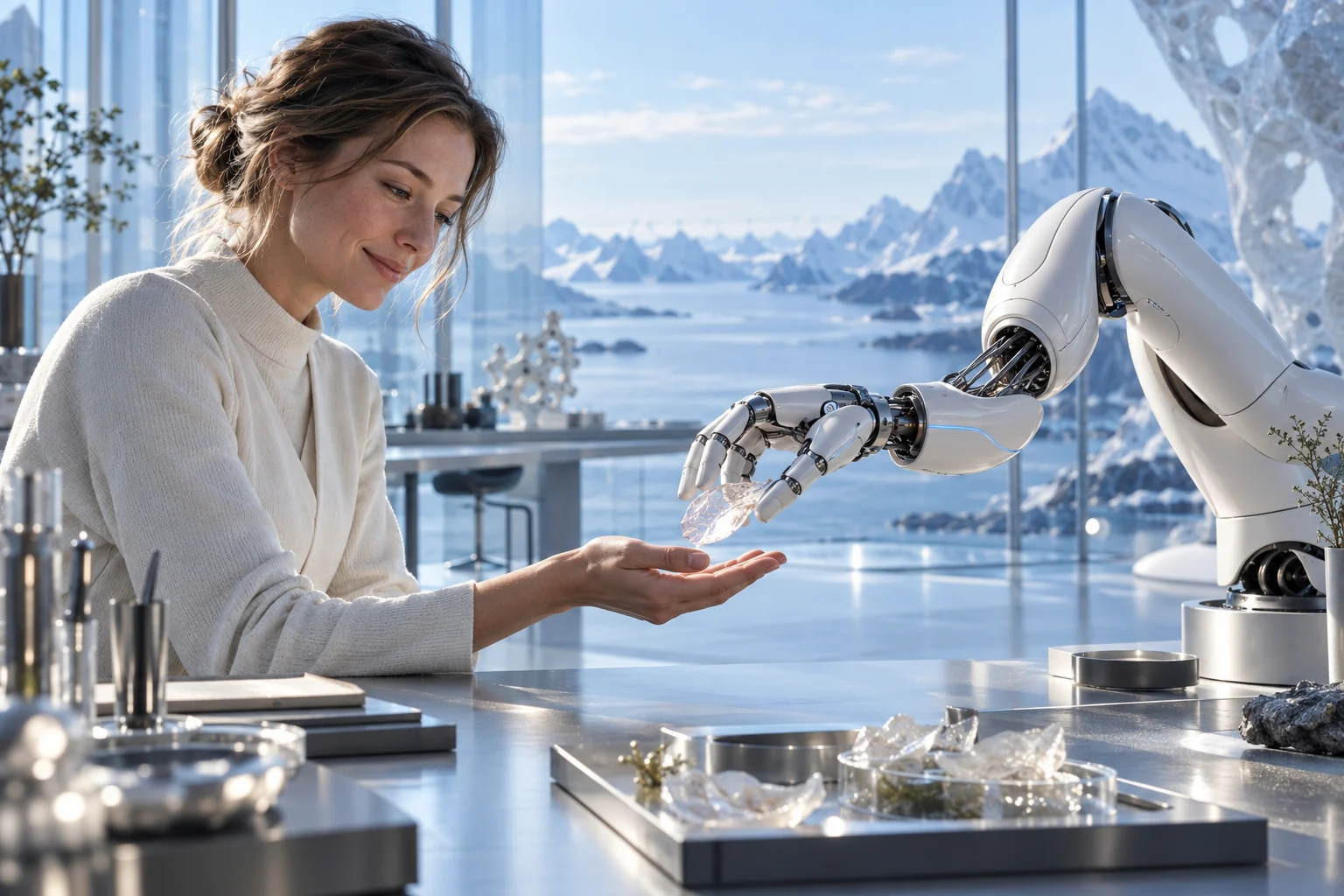
OUR DIRECTION / HUMAN AGENCY
A hand moves. A surface deforms. A model proposes a next step. The person still needs a meaningful choice.
Our concept connects three layers: sensing what happens, interpreting a limited task, and making the next action understandable and interruptible. A movement signal is evidence to interpret; it is not consent on its own.
Pressure, deformation and motion describe different parts of contact. Combine them with timing and a defined task before drawing a conclusion.
Local computation could compare a signal with a limited model close to the device. The interface should show what is known, what is missing and when it needs help.
A proposed action should be easy to understand, confirm or refuse. An earlier confirmation should not silently carry over when the situation changes.
MATERIAL INTELLIGENCE / DESIGN DIRECTION
What if the surface of a robot became part of how it listens?
Soft, structured materials can deform around an object. Tactile sensors can make aspects of that contact measurable. We want to explore the meeting point: a compliant interface, a readable signal and an understandable response.
Explore the material connection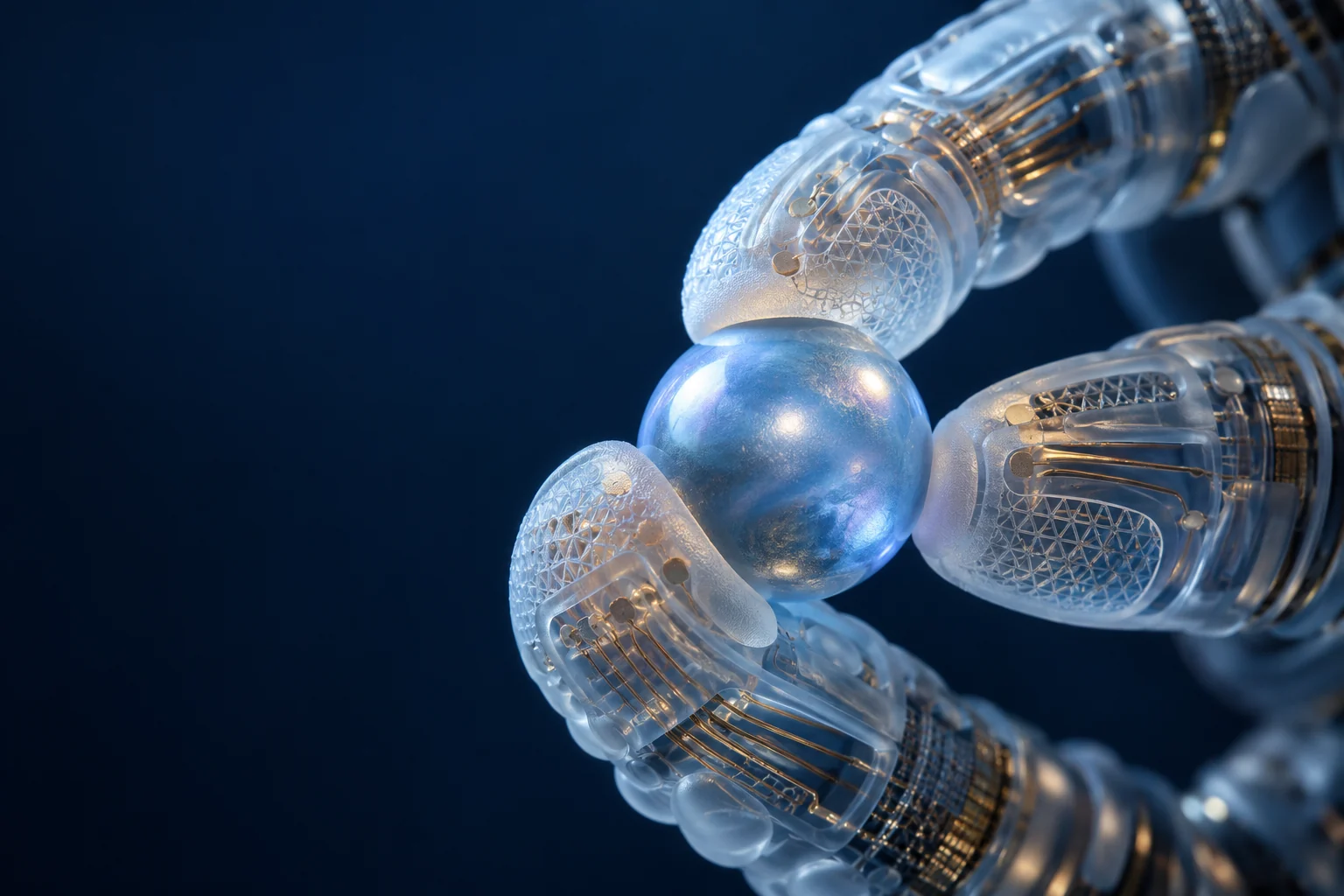
Contact changes shape. Sensor design determines which parts of that change become measurable.
Skin and nervous systems inspire questions about distributed sensing. A bio-inspired material does not itself become living tissue.
Our proposed starting point: compare a contact sensor with a reference on a bench, vary the contact and document drift and signal loss.
INTENT STUDIO / EXPLORE A DECISION
Same inputs. Two decision policies. One important difference: who authorises the next step.
Change the inputs and compare an automatic action with a step that also requires human confirmation. Every rule is visible below.
An illustrative input score, not a calibrated probability.
A fictional index of contact and obstacle constraints. Higher means more room in this model.
ILLUSTRATIVE DECISION MODEL
Fragile handover01 / DIRECT ACTION
The model’s thresholds are met. This policy does not require separate confirmation.
02 / HUMAN CONFIRMATION
The model’s thresholds are met. A person still needs to confirm this step.
Both inputs pass the model’s thresholds. The policies differ in whether confirmation is required.
THE RULE THAT APPLIES NOW
Confidence ≥ 75 and margin ≥ 50. The next step depends on the decision policy.
A missing sensor stream, confidence below 45, or margin below 30 gives Hold in both policies. Human confirmation cannot override this.
If the Hold rule does not apply, confidence below 75 or margin below 50 gives Ask in both policies. Confirmation is unavailable until both higher thresholds are met.
With an available stream, confidence of at least 75 and margin of at least 50, Direct action gives Proceed. Human confirmation gives Ask until this step is confirmed. Changing any input clears that confirmation.
A deterministic browser demonstration with fictional thresholds. It does not estimate real robot safety, read intention or control hardware. This is a way to inspect a design question; a physical system would require its own validation.
OUR NEXT STEP / A TESTABLE DIRECTION
Our ambition is to connect biology-inspired sensing and digital intelligence with human control. We begin with a narrow, documented question that can be tested.
Define a material, a contact sensor and a reference measurement. Record repeatability, noise and drift.
Use recorded bench signals to compare fixed rules. Include missing data and ambiguous situations.
Study whether people understand the proposed action, the confirmation and the stop. Publish the method and limitations.
Research direction · concept stage. The designs on this page express what we want to explore.
Explore a collaborationRESEARCH CONTEXT
Independent research informs the questions we ask. These publications do not describe Nano Genetics products or validate the rules in Intent Studio.
Researchers combined a tactile palm with soft pneumatic fingers. Feedback helped adjust grasps and inspect object surfaces in experiments. The results concern the tested tasks, rather than unrestricted robot capability.
Read the original studyA textile glove with vibration feedback conveyed contact information from a robotic gripper to the user during teleoperated grasping experiments. This demonstrates a particular feedback loop, not a substitute for all aspects of natural touch.
Read the original studyCONTINUE EXPLORING
HUMAN SYSTEMSStart with the person.↗NANO GENETICSHelp the next step take shape.↗