
01
MOLECULAR
The language
of life
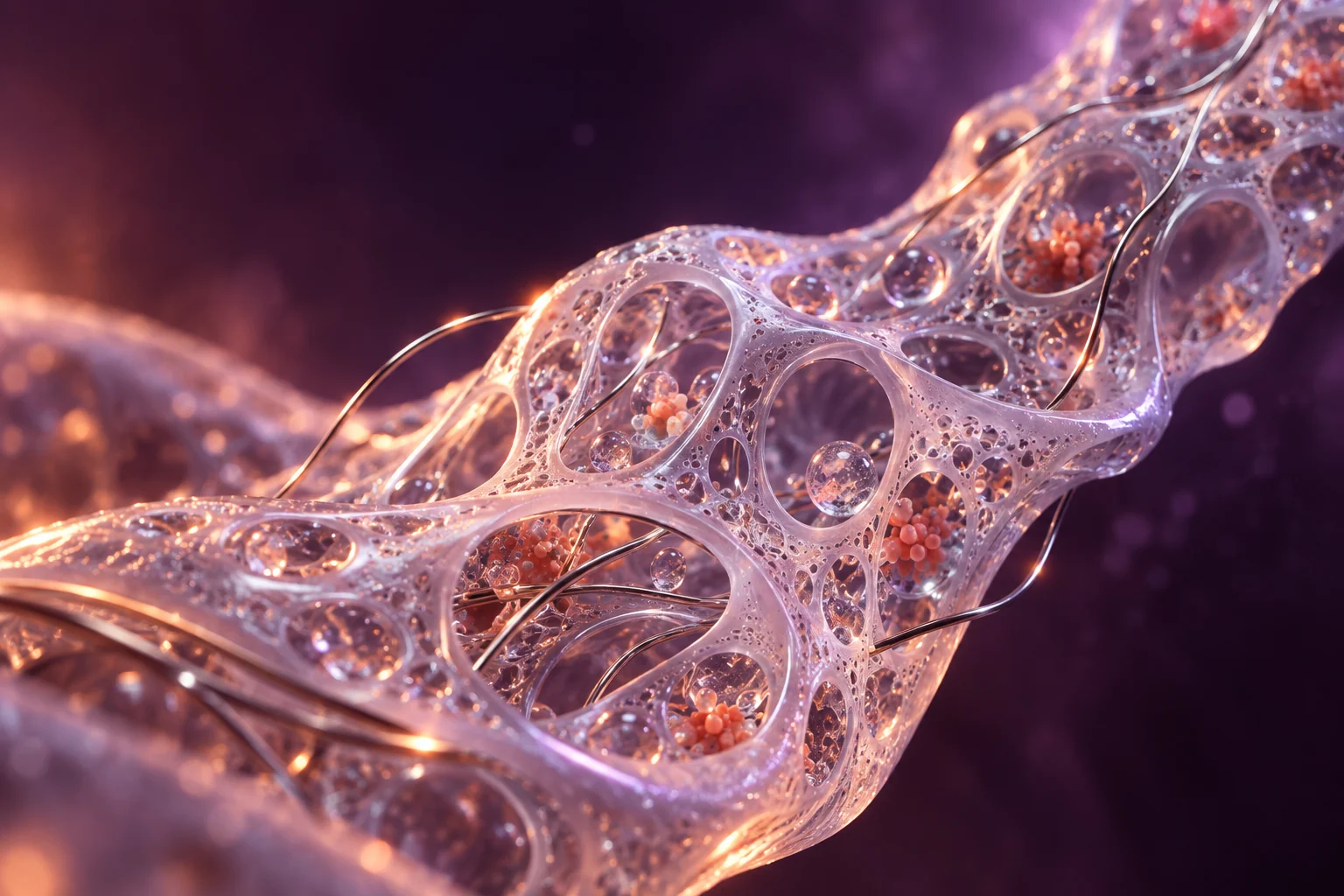
DNA stores genetic information. Molecular biology explores how that information is expressed, regulated and connected to the workings of a cell.
Explore the foundation ↗ NANO GENETICSSWEDEN AB
SV ↗
NANO GENETICSSWEDEN AB
SV ↗
CHAPTER 06 / HUMAN + ROBOT
Our next chapter brings biology and robotics closer together. We want to connect human signals, soft tactile interfaces and local intelligence in systems shaped around the person.
Explore Human + Robot Enter Intent Studio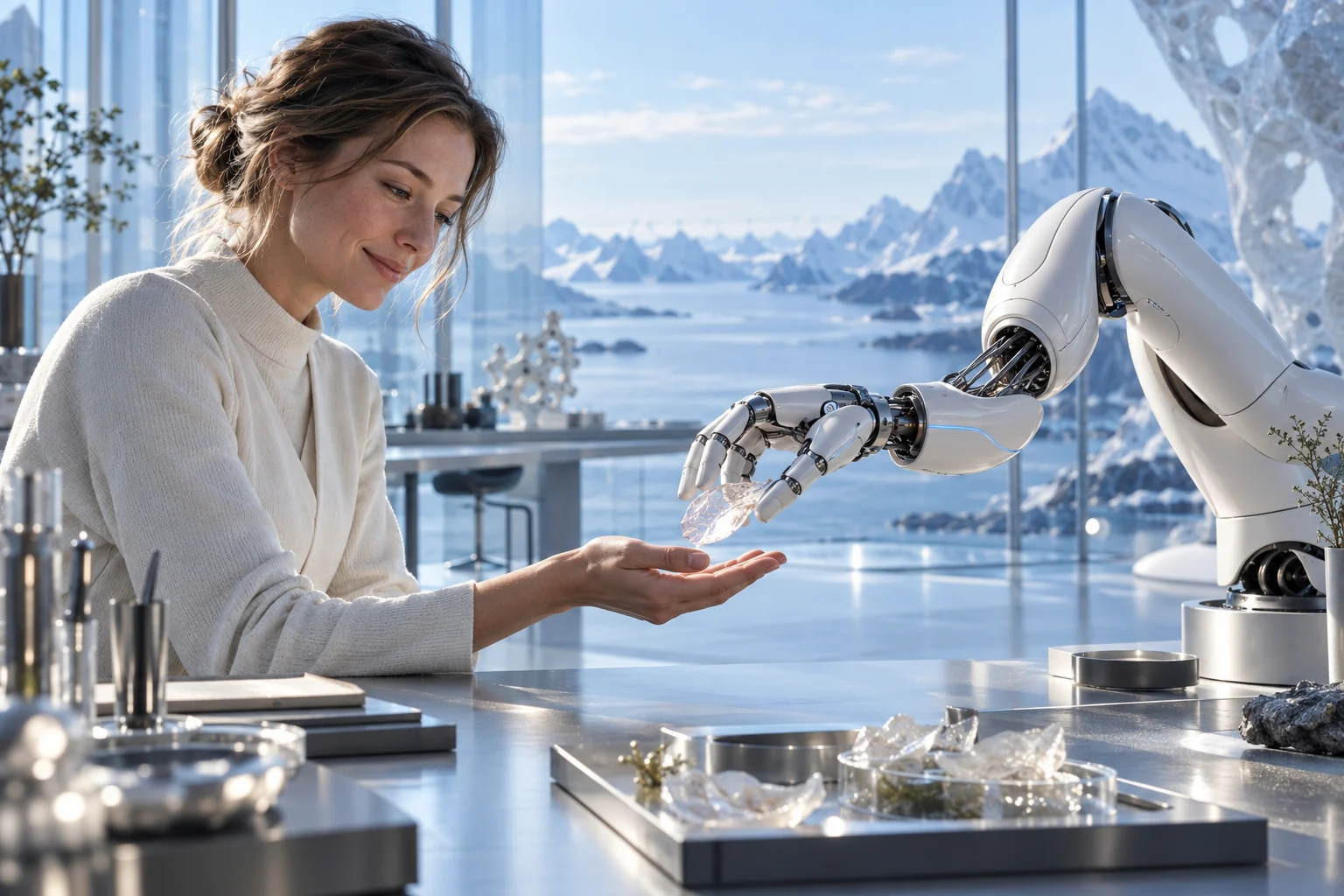 HUMAN + ROBOT / SHARED INTENT
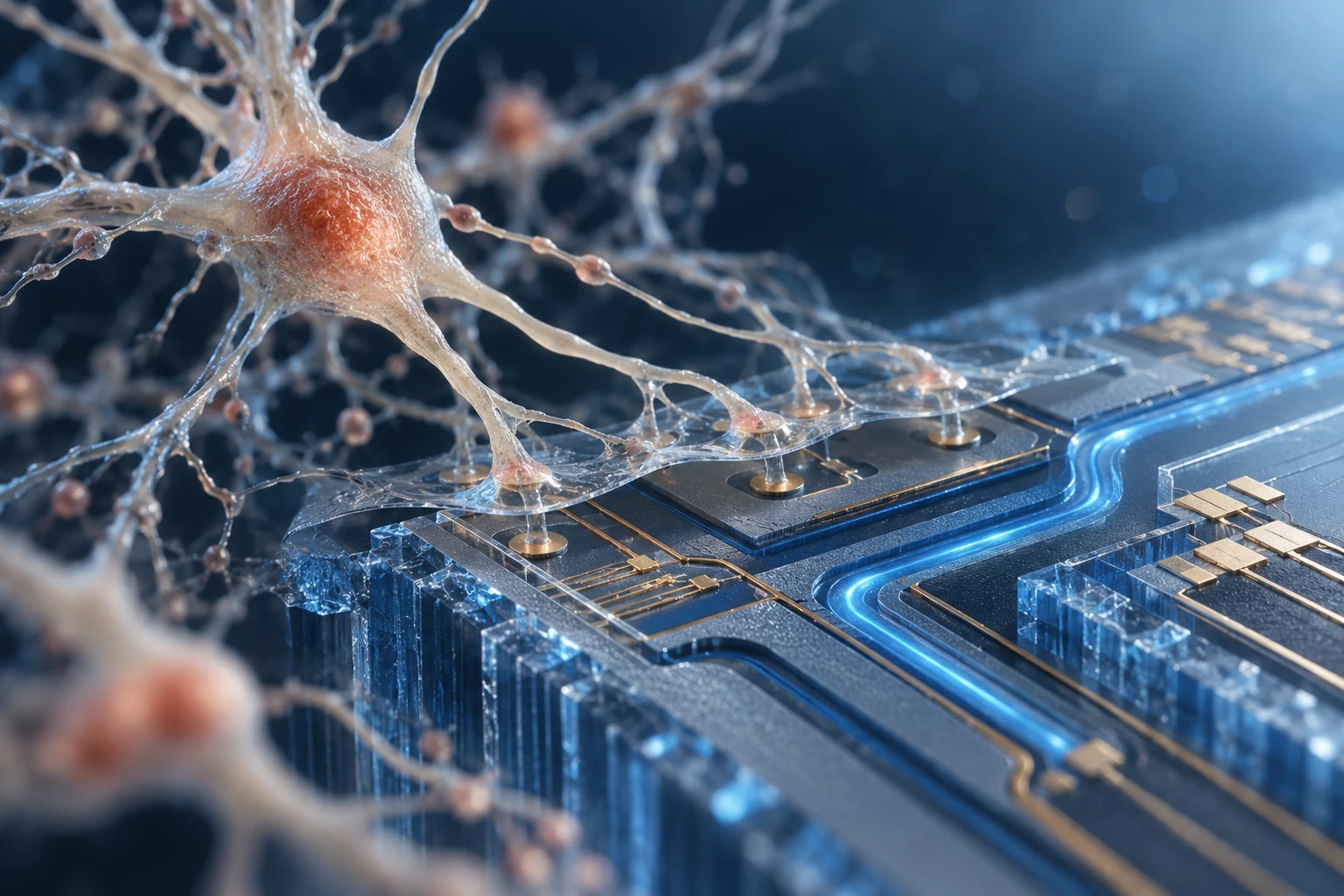
NEW / HUMAN-CENTRED ROBOTICS
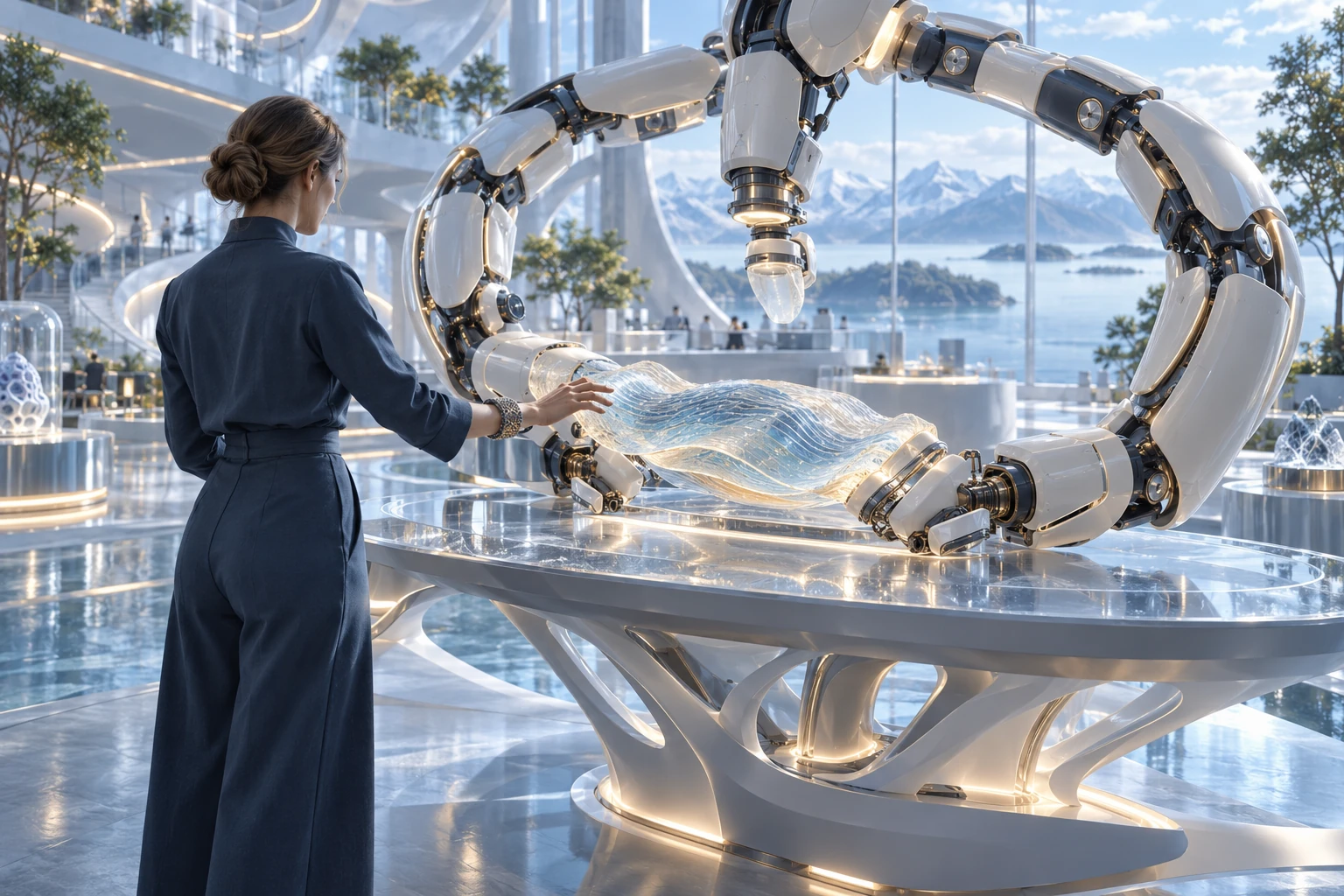
What should a robot do when a signal becomes uncertain? Explore our direction for a loop connecting human intention, measured contact and understandable feedback.
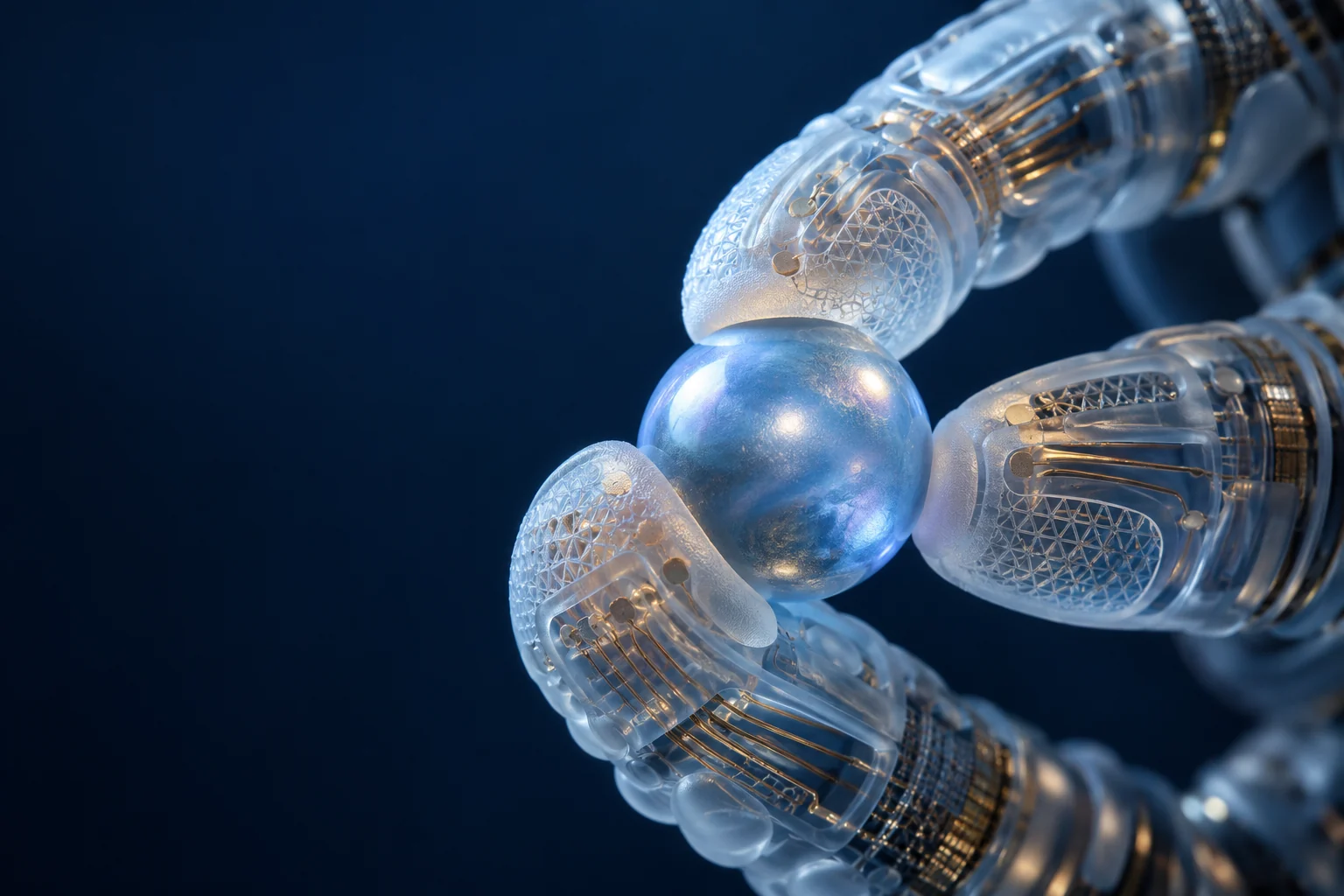
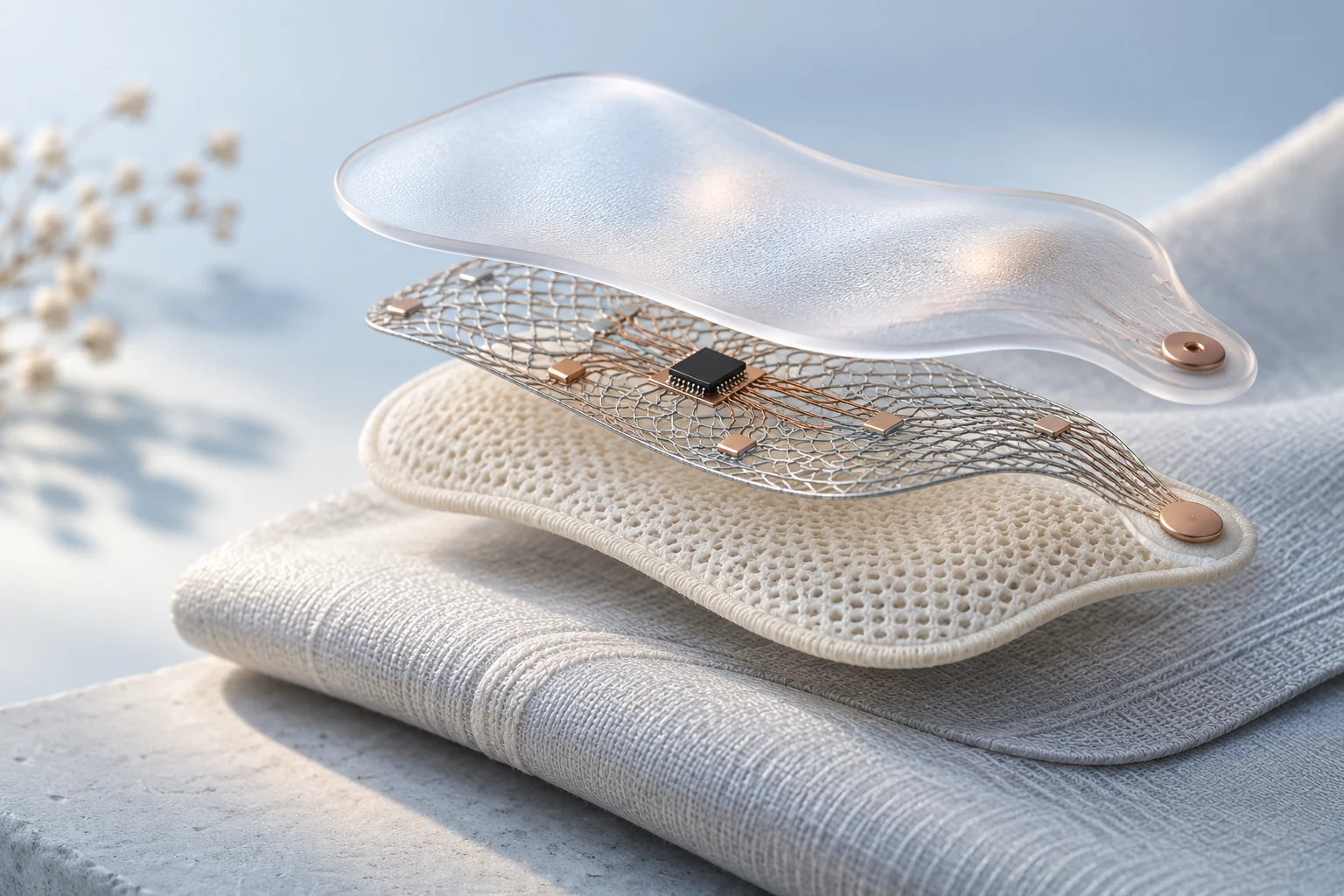
NEW / SYSTEM STUDIO
Choose a purpose. Combine movement, muscle and environmental signals. See the raw data budget and take a clear concept brief with you.
An interactive planning tool with stated assumptions. The image illustrates a future concept.
CHAPTER 04 / CONNECTION OBSERVATORY
NEW PERSPECTIVES / 2026A quiet interface on the skin. A material that translates ionic activity into electronic signals. Explore two scales of the same ambition: technology that works closer to the person.
Enter the observatoryExplore the external research and our proposed direction in the observatory.
INTERACTIVE EXPERIENCEFollow a signal. Change the conditions.NEW / EXPLORE THE HUMAN FRONTIER
A closer look at the technologies that could connect biological signals with useful intelligence. Explore the evidence, the open questions and our direction.
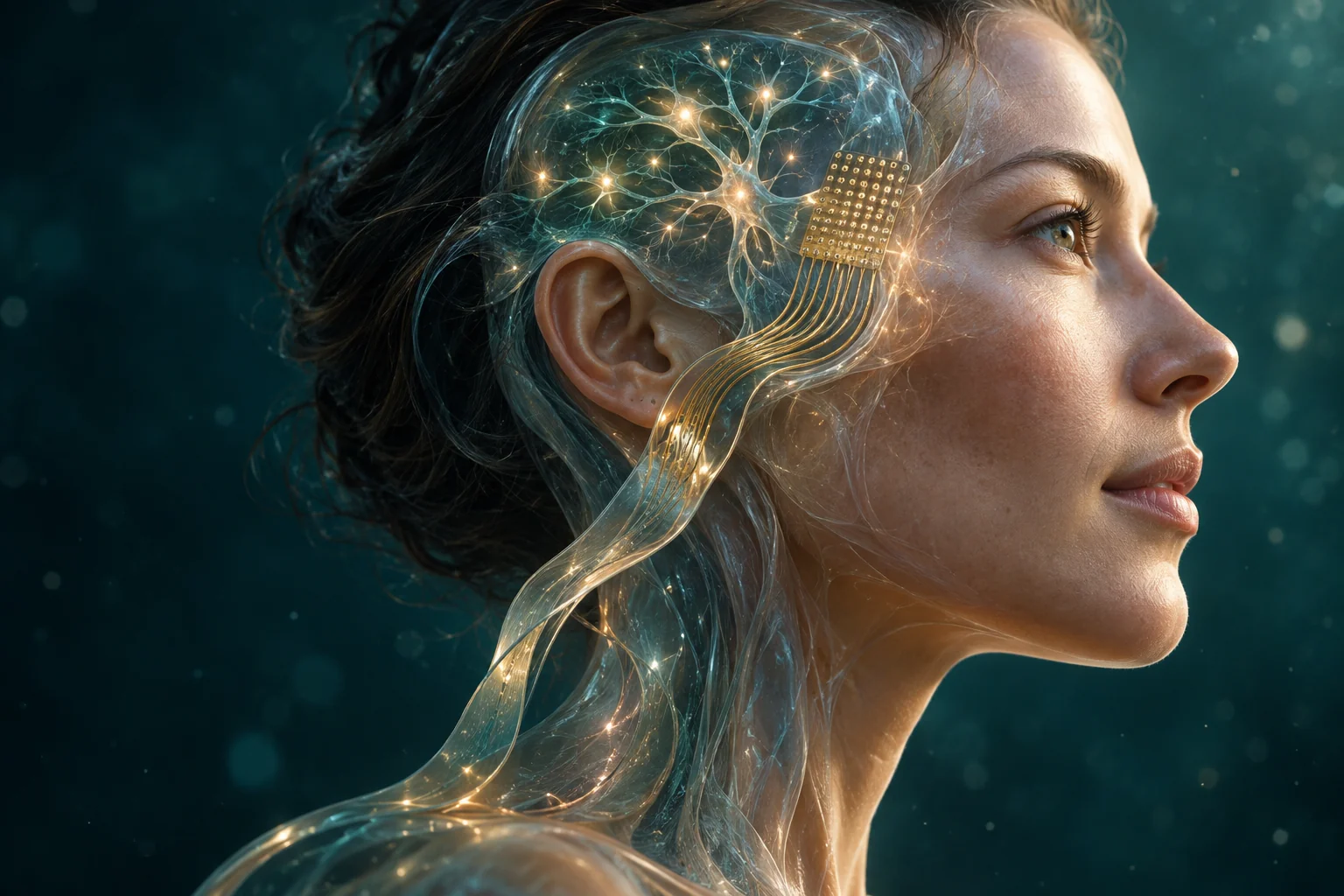 01 / NEURAL
How electrical activity becomes communication. Brain–computer interfaces, neural signals and the role of machine learning.
Explore the connection ↗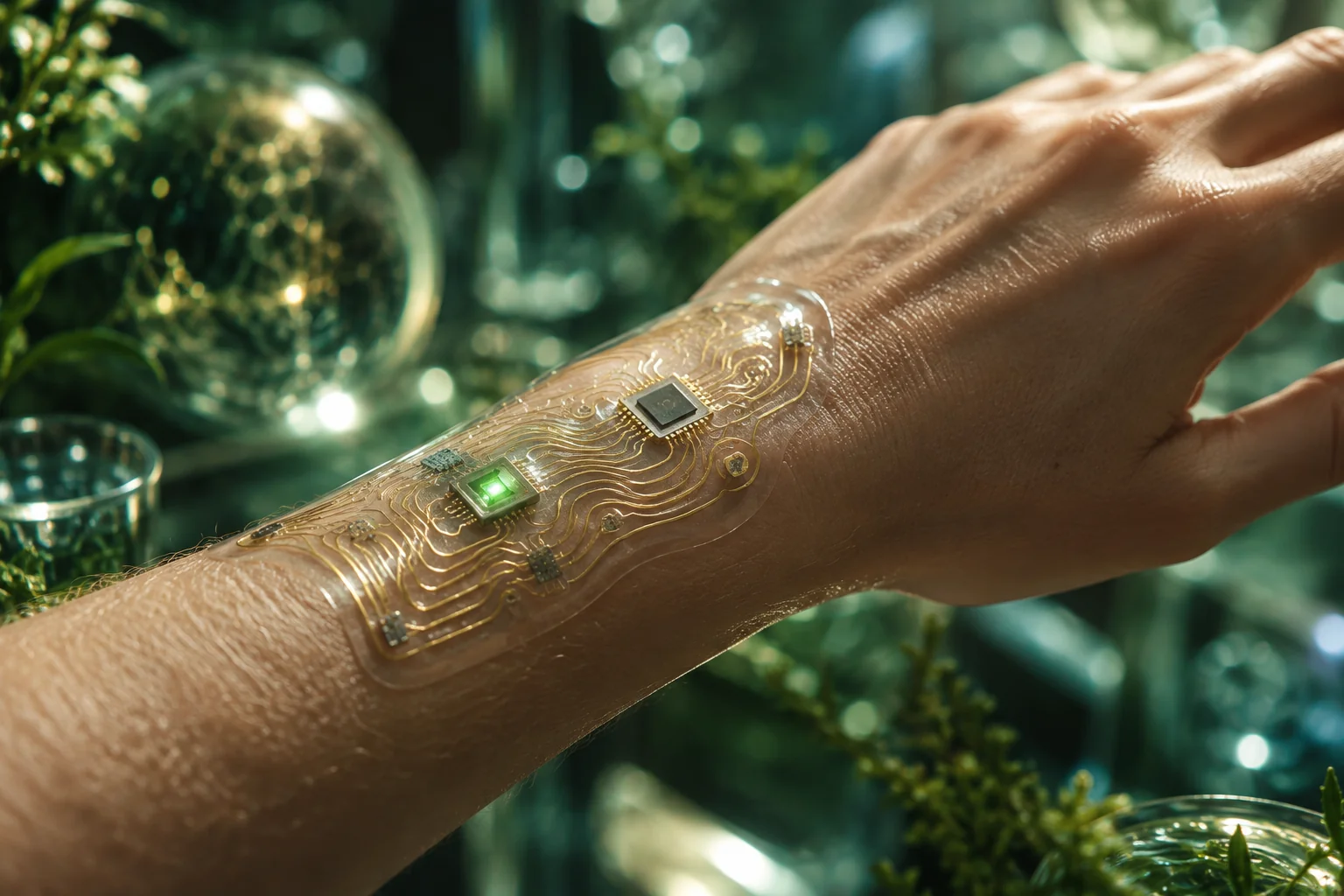 02 / SENSING
From the skin to a digital response. Flexible electronics, muscle signals and models that work close to the person.
Follow the signal ↗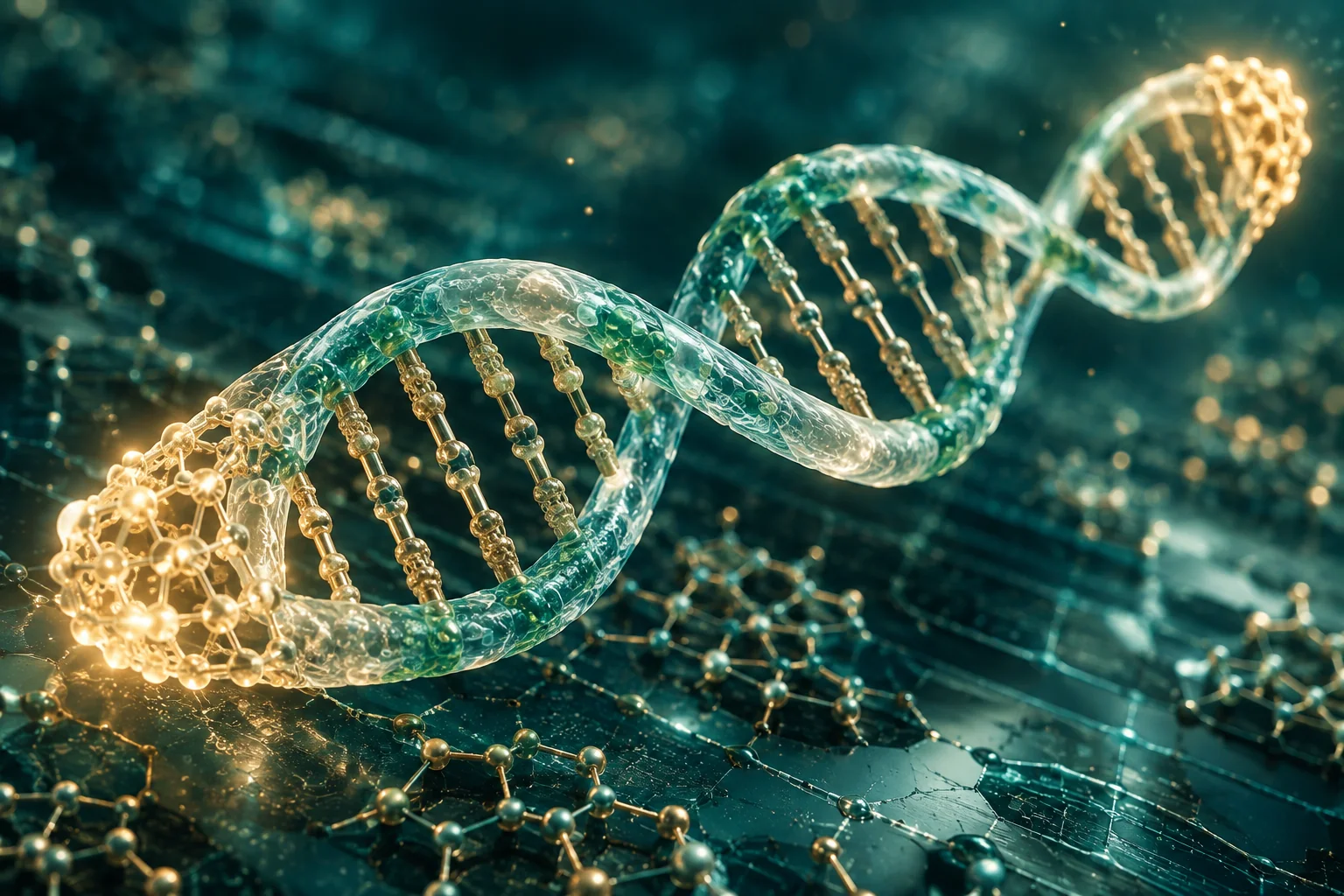 03 / MOLECULAR
The code and the protective ends of chromosomes. Discover what molecules can tell us, and what they cannot.
Look inside the cell ↗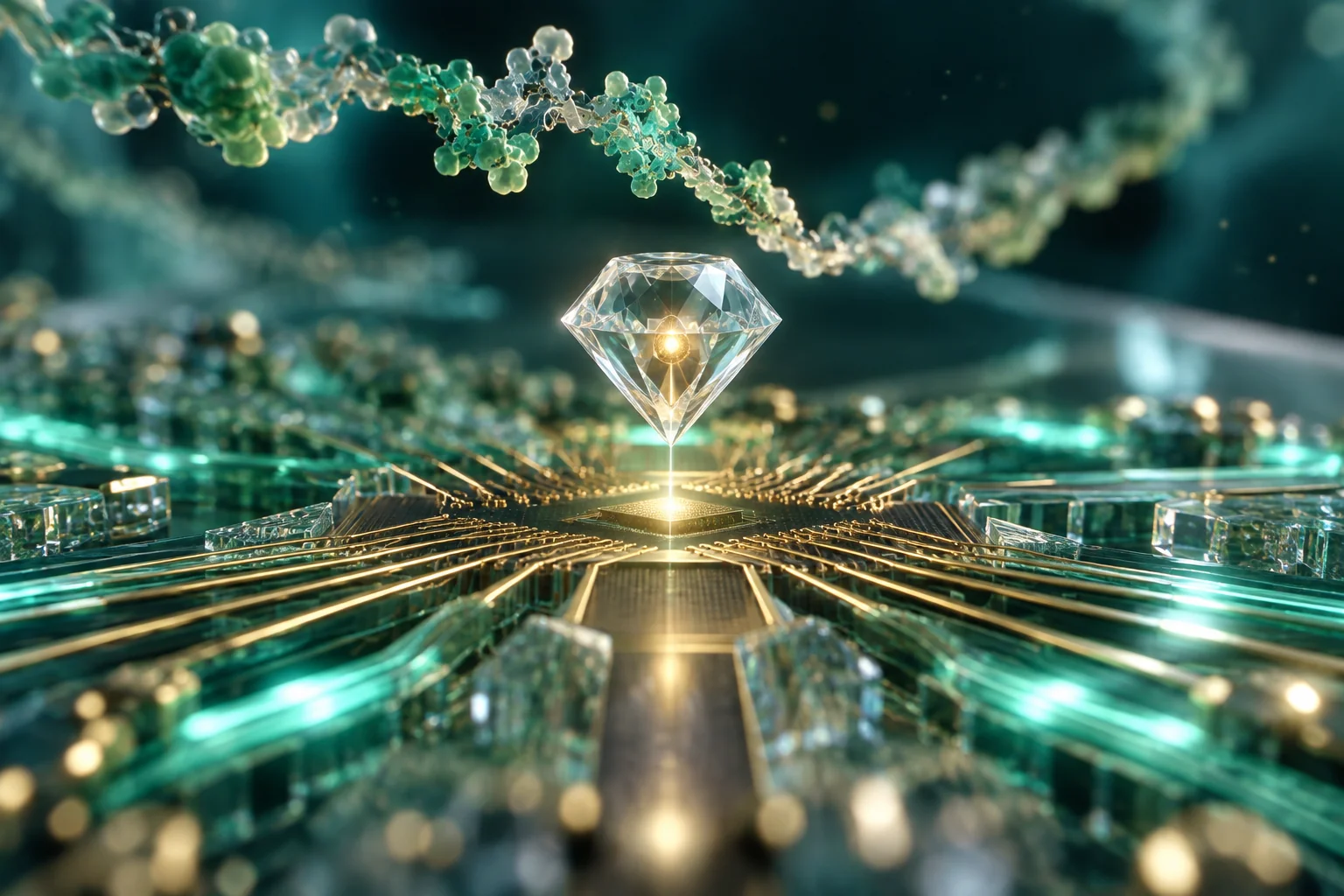 04 / NANO + QUANTUM
DNA nanostructures, sensitive magnetic measurements and the scientific tools that let us investigate smaller scales.
Explore the small scale ↗Concept visualisations of our research direction.
THE NEXT STEP
Our proposed first step is a non-invasive sensor demonstrator: measure a defined signal, check its quality and make the interpretation understandable. Broader human augmentation remains a research ambition.
See the prototype direction ↗CHAPTER 03 / RESEARCH ATLAS
Explore the building blocks: how a chip handles events, how cells meet a microchannel, how a model represents a biological process, and how a person feels a response.
Open the research atlas ↗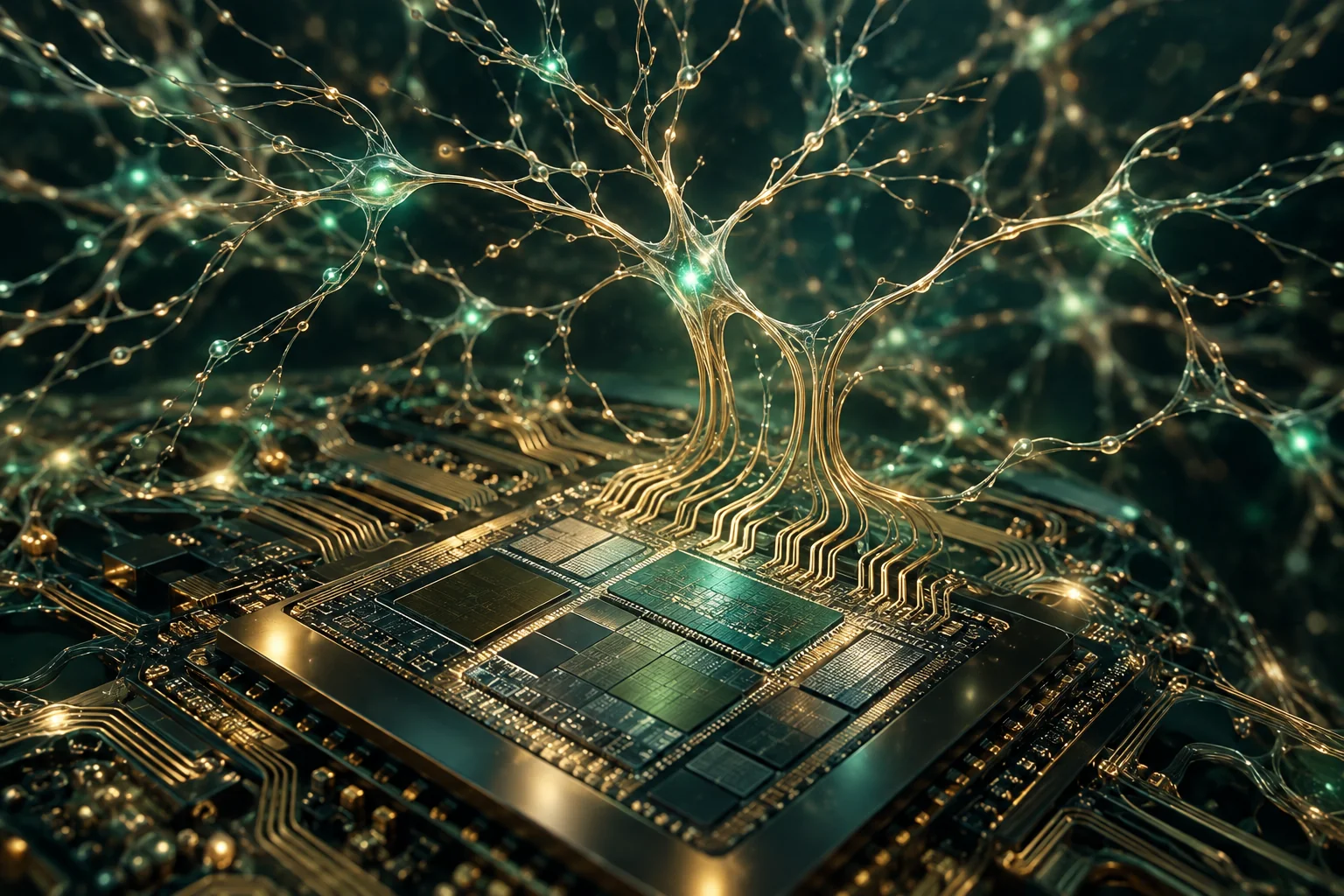
Events, connections and energy. Explore a different way to process information.
Explore the chip ↗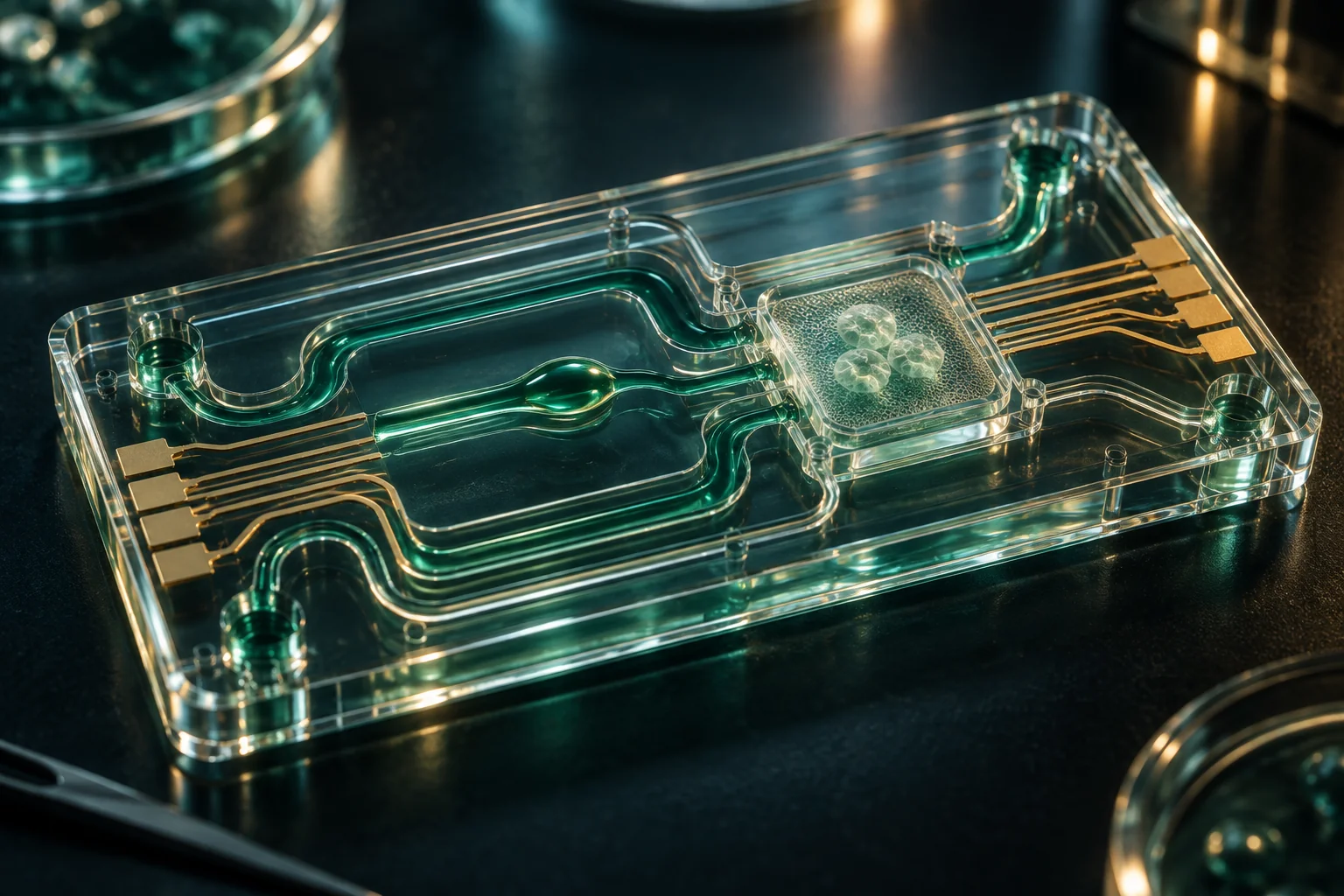
Tiny channels, controlled environments and cell models that help researchers ask precise questions.
Follow the microchannel ↗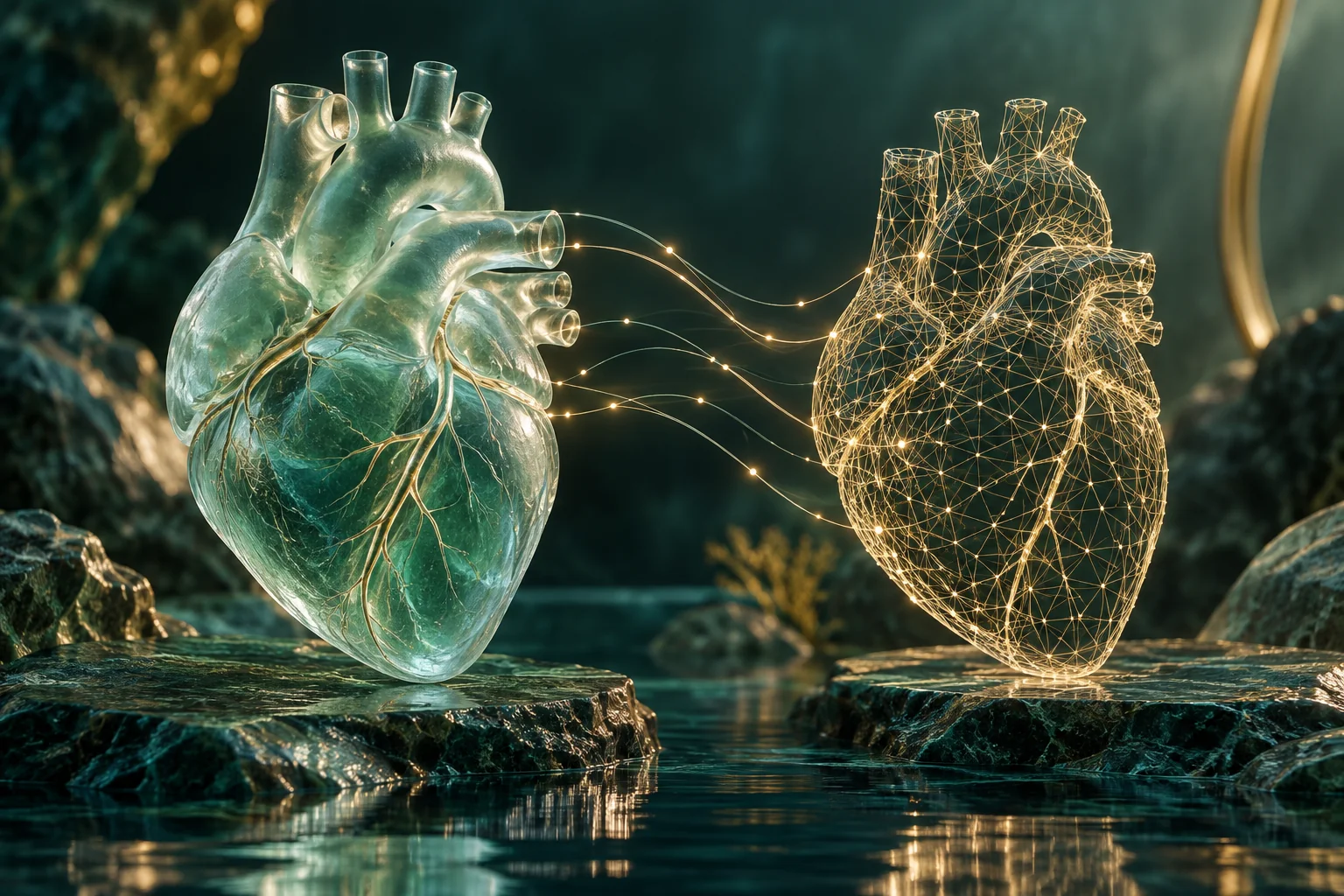
Connect measurements to a defined simulation. Test predictions and make uncertainty visible.
Explore the model ↗
Touch and meaningful feedback bring the digital result back to the person.
Discover the feedback ↗The atlas links published research to open questions and our proposed development steps.
01 / OUR VISION
What becomes possible when we connect the language of biology with the tools of the digital world?
Nano Genetics Sweden AB is shaping a vision at the intersection of molecular biology, quantum science and digital technology. We want to make complex connections understandable — and explore how data, models and simulation can help us ask better questions.
Our direction: explore, model, validate. This website introduces our vision and fields of interest; it does not present proprietary research results or clinical services.
02 / CONNECTED DISCIPLINES
From molecules to models. Each perspective reveals a different part of the picture.
MOLECULAR
DNA stores genetic information. Molecular biology explores how that information is expressed, regulated and connected to the workings of a cell.
Explore the foundation ↗QUANTUM
Quantum biology investigates the role of quantum effects in specific biological processes. Magnetic sensitivity in bird cryptochrome is one actively studied example.
Follow the research ↗DIGITAL
Computation can help us analyse biological data and predict molecular structures. Models offer insight — their predictions still need careful evaluation.
Discover the possibilities ↗03 / INTERACTIVE EXPLORER
One sequence. Two ways to see it. Explore how a schematic DNA structure can become a digital representation.
5′ → 3′
A = 00 T = 01 C = 10 G = 11
Two complementary strands: A pairs with T, and C with G. Rotate the model to see its structure from another angle.
An educational illustration, not an atomic simulation. The sequence is synthetic. The binary mapping is an arbitrary encoding, not a quantum calculation.
04 / CONNECTED SYSTEMS
Our vision is a connected chain from events in biology to information people can understand.
BIOLOGY
Biological context gives a measurement meaning.
SENSING
Choose a measurement principle suited to the signal and environment.
CONNECTION
Connect timestamps, units, provenance and quality.
INTELLIGENCE
Compare signals and make uncertainty visible.
HUMAN
Understand, review and make informed decisions.
Concept architecture • no connected devices or personal data collection on this website.
05 / SENSOR ATLAS
Different sensor types answer different questions. We want to explore how they can complement one another.
Light, colour and fluorescence
Optical measurements can reveal information about a sample. Wavelength, background and calibration affect interpretation.
Chemistry becomes an electrical signal
A chemical interaction can become a measurable electrical change. Selectivity and drift need to be checked.
The body in context
Movement, temperature and electrical biosignals can provide different perspectives. A signal is not a diagnosis.
The surroundings matter too
Temperature, light and humidity can help us understand measurement conditions and interference.
Close to the measurement target
Nanostructures are a research area for interfaces between materials and biological systems. Function must be validated in the relevant environment.
A different way to sense
Quantum sensors can measure quantities such as magnetic fields. Diamond NV centres are studied at very small scales; this is distinct from quantum biology.
06 / INTERACTIVE SIGNAL LAB
Choose a scenario and add interference. See why data quality is part of every digital model.
SIGNAL → CONTEXT → HUMAN
A simplified demonstration in relative units. Curves are generated in your browser and do not represent a real sensor, molecule or patient.
07 / HUMAN IN THE LOOP
Our goal is to make complex systems understandable and useful, starting with human needs.
Show what was measured, when and under what conditions.
Separate observations from model assumptions and suggestions.
Design future systems with clear permissions, consent and human review.
08 / DEVELOPMENT HORIZON
A proposed development path for Nano Genetics — not a list of finished products.
Choose a concrete problem, a signal and the person the system should support.
Connect a bounded sensor stream to a visualisation with explicit data quality.
Evaluate against reference measurements and document limitations.
Develop interoperability, security and usability before scaling.
09 / THE NEXT CHAPTER
A direction for the next stage of IGI.
Our ambition is to connect knowledge across scales: from molecular processes to digital models. The next step is to define focused questions, identify suitable data and build concepts that can be tested.
VISION & CONCEPT DEVELOPMENT10 / SCIENTIFIC FOUNDATIONS
The science that informs our questions. Independent sources, not claims of affiliation or work performed by Nano Genetics.
An introduction to DNA, its structure and the information it carries.
Laboratory evidence of magnetic sensitivity in a bird protein; the biological mechanism remains a research question.
A milestone in computational structure prediction, with defined capabilities and limitations.
An introduction to biomedical sensors and measurement principles.
Research background on diamond-based magnetic sensing at small scales.